Field Notes: Safety – Fabrication Safety in chemical and material handling systems is often discussed in terms of operation and maintenance.
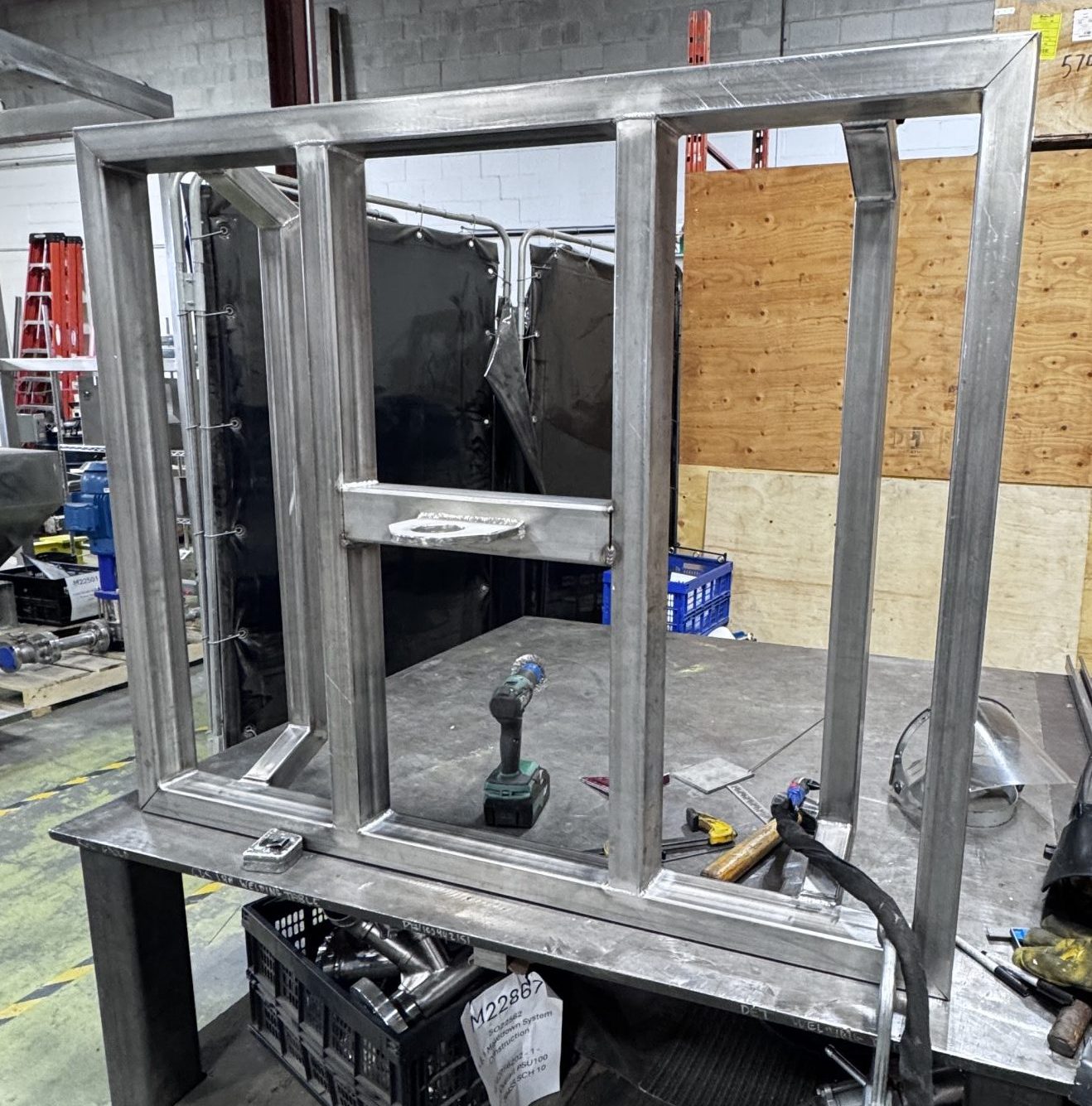
In practice, many of the most significant risks originate much earlier — in design and fabrication. Recently, we were asked to review and replicate a bulk bag support structure used to lift and position bags over a powder wetting system. The existing structure had been fabricated in aluminum and had been repaired and re-welded multiple times. It had no visible load rating, no tagging, and no indication that it had been certified by a professional engineer.
This is not an isolated case.
Bulk bag unloading frames and support structures are frequently found in both municipal and industrial applications with:
- No clearly defined load capacity
- No certification or supporting documentation
- Evidence of modification or repeated repair
- Limited assurance of structural integrity
These systems are routinely used to lift and support significant loads directly above operating equipment and personnel.
The risk in these situations is immediate.
This concern is not limited to structural fabrication.
Similar compromises are often seen in process piping systems, where fabrication methods are selected based on cost or convenience rather than long-term performance.
Threaded piping connections remain common in many chemical systems. While they can reduce initial fabrication time and cost, they also introduce multiple potential leak points.
Over time, vibration, thermal cycling, and normal operating stresses can degrade these connections, leading to:
- Chemical leaks in liquid systems
- Dust release in powder handling systems
- Operator exposure to hazardous materials
- Increased maintenance and housekeeping requirements
In many applications, the materials involved may be corrosive, hazardous to inhale, flammable, or reactive, making containment a critical safety requirement.
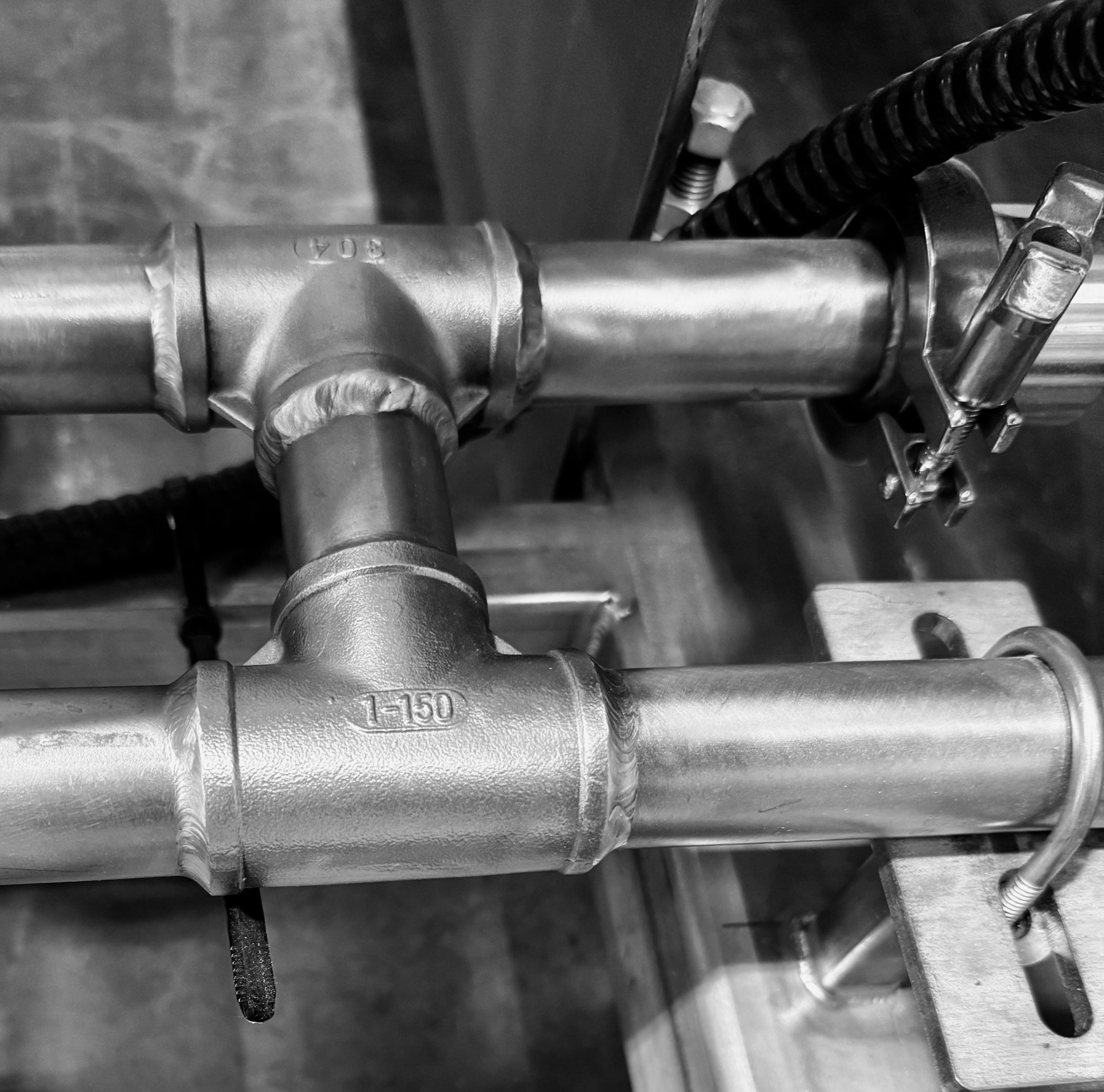
A fabrication approach based on welded piping systems — including socket weld and butt weld connections — reduces these risks significantly.
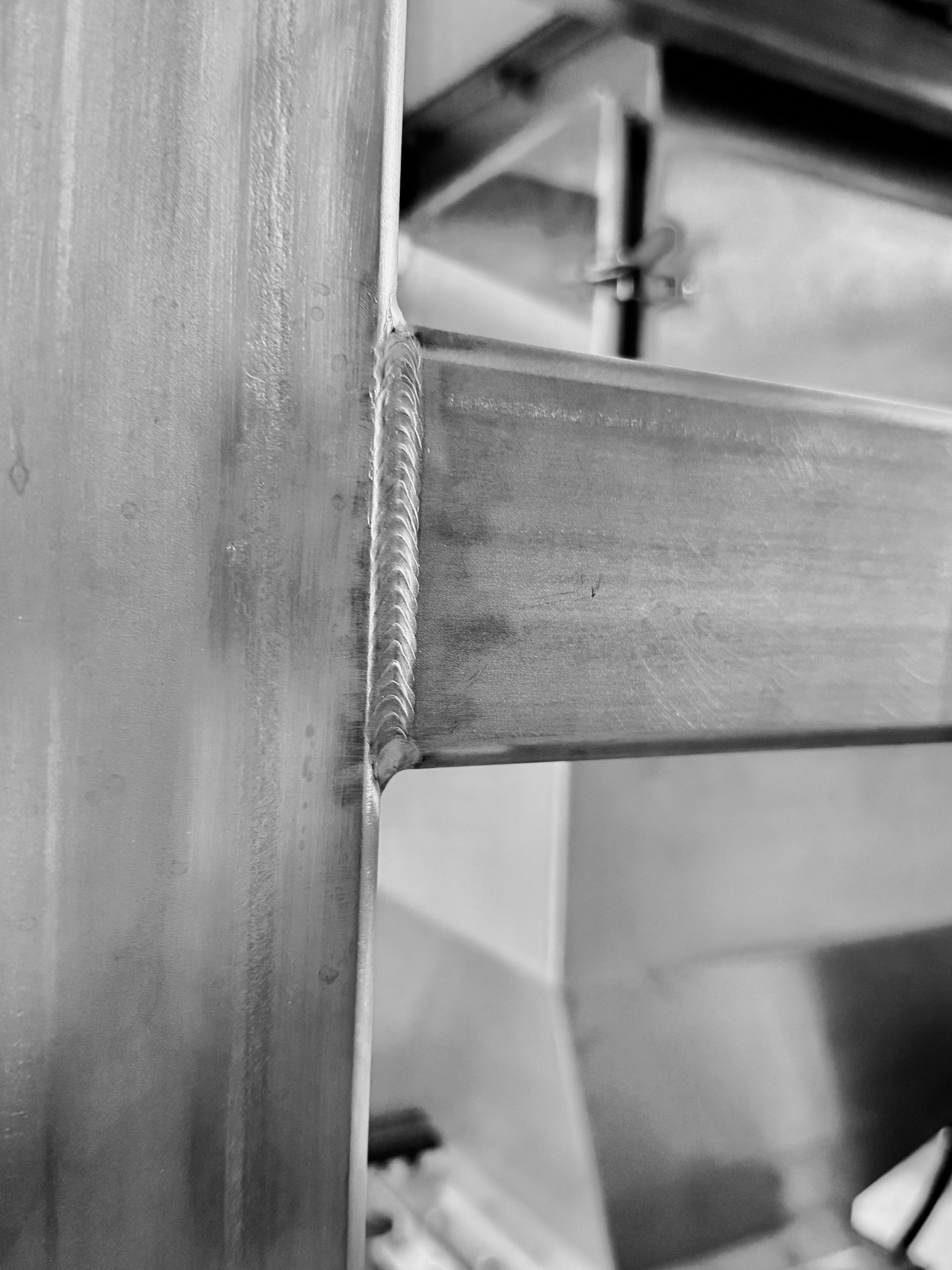
Welded joints provide improved mechanical strength and reduce the number of potential leak paths within the system.
At the same time, effective system design must account for access and serviceability.
Strategic use of flanged connections and tri-clamp fittings allows for safe inspection, maintenance, and component replacement without compromising overall system integrity.
Threaded fittings, particularly in stainless steel systems, can also introduce maintenance challenges due to thread galling. Seized connections can complicate disassembly and increase downtime during routine service.
It is also important to recognize that welding alone does not ensure quality.
Reliable systems depend on qualified welding procedures, certified welders, and adherence to recognized fabrication standards for both piping and structural components.
This level of discipline requires greater effort during fabrication, but it results in equipment designed for long-term containment, durability, and safe operation.
In chemical and material handling systems, safety is not determined at startup. It is determined by the decisions made during design and fabrication. And in many cases, those decisions come down to how the structure is built — and how the piping is joined.
Closing
Containment and structural integrity are not features — they are outcomes of disciplined fabrication. It’s how we ensure the systems we build perform safely and reliably — not just at startup, but over their entire operating life.
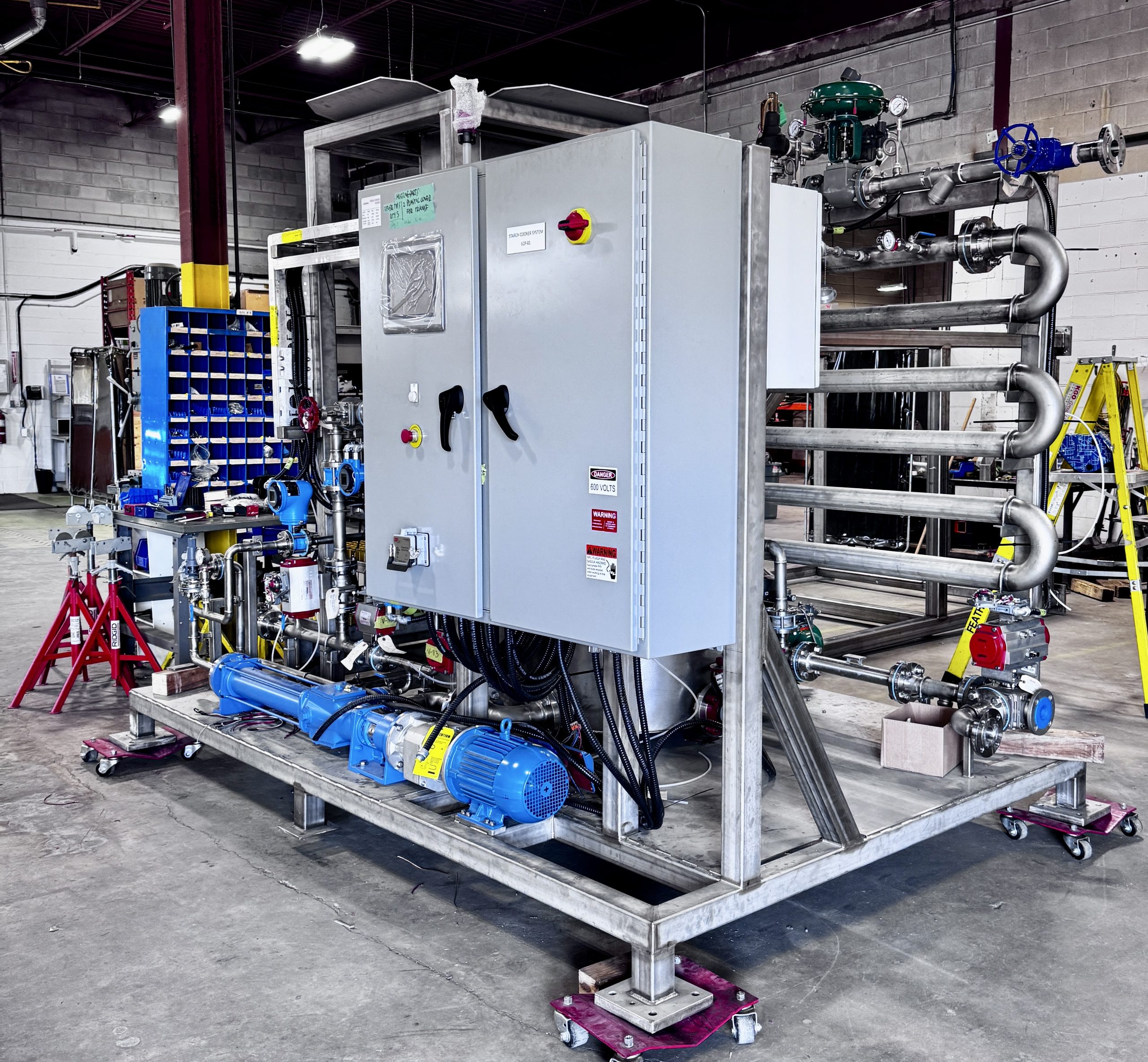
Meets all standards for electrical, structural and piping